The 2-Minute Rule: Why Response Time is #1 in Dental Tourism
Clinics that respond within 2 minutes convert 78% more patients worldwide.
AI is no longer just for enterprise companies. Learn how AI-powered CRM helps small businesses automate lead scoring, predict sales, and manage customers smarter.
In 2026, CRM software is no longer just a database for storing customer information — it's an intelligent sales assistant. Artificial intelligence, integrated into CRM platforms, enables sales teams to achieve more results with less effort.
According to Gartner's 2026 report, 65% of businesses using CRM now leverage some form of AI capability. But what does this actually mean, and how can small businesses benefit?
An AI-powered CRM adds machine learning, natural language processing (NLP), and predictive analytics layers on top of traditional customer relationship management software.
Simply put:
AI analyzes your historical sales data to automatically score new leads. Which lead has the highest conversion probability? Your sales team prioritizes the most valuable opportunities.
AI analyzes pipeline opportunities to create monthly/quarterly revenue forecasts. It evaluates historical trends, seasonal changes, and opportunity stages to give you accurate predictions.
CRM suggests daily tasks to sales reps in priority order: "Call Mr. Smith today — he's been waiting 3 days for a response and is in the proposal stage."
AI chatbots on your website or WhatsApp work 24/7 — answering questions, scheduling appointments, and automatically logging lead information into your CRM.
AI determines the most appropriate email content, send time, and subject line for each lead. It optimizes open and click-through rates automatically.
By analyzing email, WhatsApp, and call records, AI measures customer satisfaction levels. It identifies angry or at-risk customers before they churn.
Automatically completes missing customer information (company size, industry, location). Reduces manual data entry by up to 60%.
| Benefit | Traditional CRM | AI-Powered CRM |
|---|---|---|
| Lead Prioritization | Manual evaluation, gut-feeling decisions | Automatic scoring, data-driven priorities |
| Sales Forecasting | Manual calculation in spreadsheets | Real-time, AI-powered predictions |
| Customer Follow-up | Follow-ups can be forgotten | AI auto-reminders with optimal timing |
| Data Entry | Everything manual, high time cost | Auto data capture and enrichment |
| Reporting | Standard reports, historical data | Predictive analytics + smart suggestions |
Planports makes AI-powered CRM features accessible for small businesses:
In 2026, AI-powered CRM is no longer a "nice to have" — it's a competitive necessity. While your competitors auto-score leads with AI, if you're still tracking customers in spreadsheets, the gap widens every day.
The good news: AI CRM is no longer monopolized by expensive platforms like Salesforce and HubSpot. Solutions like Planports offer the same AI capabilities with WhatsApp integration and affordable pricing.

Clinics that respond within 2 minutes convert 78% more patients worldwide.

67% of CRM users report better tracking of sales opportunities and customer leads.
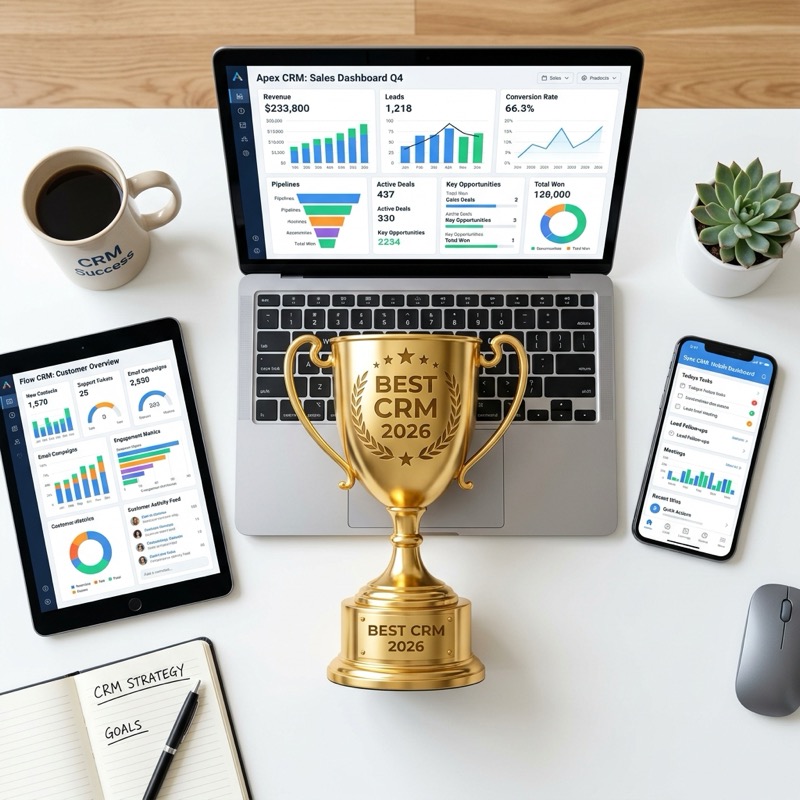
Today's best CRM software gathers customers from different channels on one platform.