Best CRM Software in 2026
Today's best CRM software gathers customers from different channels on one platform with industry-specific customization.
Research shows that delivering the right product, to the right customer, at the right time, in the right way, and at the right place increases a company's preference and profit margins.
Product-focused or customer-focused strategy? This question has been an ongoing dilemma that companies brainstorm over to reach their goals. However, today's technological developments have brought significant improvements in product quality while also increasing customers' ability to access and choose between products, as well as making it easier for companies to deliver products to customers. The competitive environment brought by globalization forces companies to reassess how they deliver value to customers — providing both quality products and similar products at low cost in abundance.
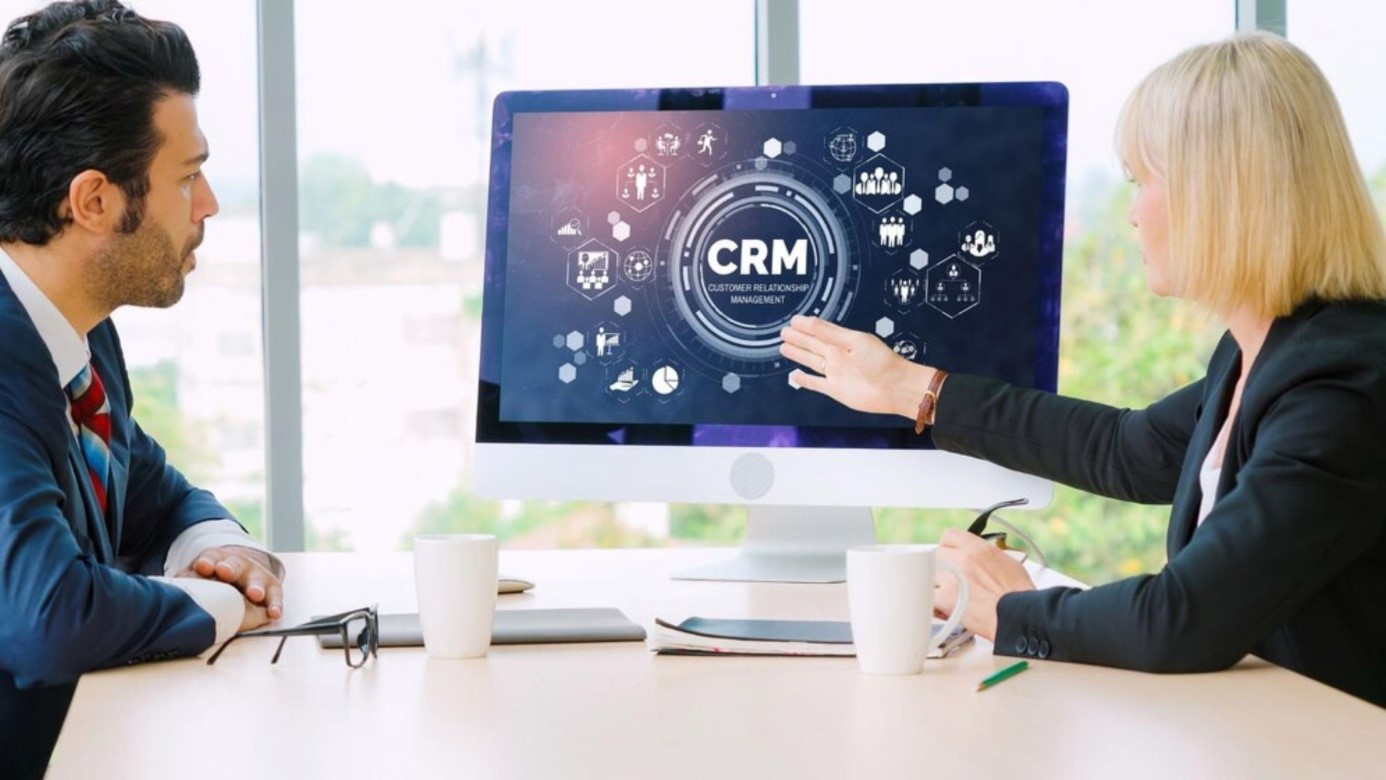
Therefore, the answer to the critical question above has shifted toward a "customer-focused strategy." Research shows that delivering the right product, to the right customer, at the right time, in the right way, and at the right place increases a company's preference and profit margins.
Whether a company is newly established or has a long history, it is very difficult to sustain its existence without a strong customer base. Today, customer potential and customer profiles have become the main factors in product marketing and delivery.
The growth of customer potential has created the need to record customer profiles. This way, companies will have a "corporate memory." Even if employees change, customer profiles will be easily accessible because they are recorded. One need in a company usually creates another. After customer potential and profiles are recorded, customer relationships need to be managed according to certain principles to ensure proper product delivery and continuity through problem resolution. For these and many similar purposes, "Customer Relationship Management" has become popular today.
Many software applications have been developed that use a company's corporate memory — consisting of records about products and customers — to analyze data and help develop new strategies. Today, both small and medium-sized businesses and large enterprises invest heavily in these applications. IT companies use the term Customer Relationship Management (CRM) to describe software applications that automate a business's marketing, sales, and service functions.
Let's start with the definition of customer relationship management, explain the topic in detail, look at CRM applications used today, and answer questions you might have.
Customer Relationship Management is the combination of applications, strategies, and technologies that companies use to manage and analyze customer interactions and data — with the goal of retaining customers and driving sales growth by delivering the right product, to the right customer, at the right time, in the right way, and at the right place. In short, it's an application that helps build lasting relationships with customers, increase satisfaction and loyalty by tailoring interactions and services to individuals.
CRM can be classified according to its purpose as follows:
Customer Relationship Management (CRM) has 3 fundamental components, and the system covers the management of these components:
For companies to continue their sales cycles, they first need a detailed record containing product, sales, and customer information. These records form the company's corporate memory. The customer database created in corporate memory will support maintaining relationships with customers, measuring satisfaction levels, examining the needs of newly acquired customers, and supporting the operation of service and consulting activities. This way, companies can develop proactive or reactive strategies.
The main purpose of marketing products is to fully understand what the customer wants. Once the customer is fully understood — that is, the first barrier is crossed — the other stages become easy. This is not just a technique but a culture for building and maintaining effective customer relationships. When you maintain constant communication with existing customers, you continually remind them of the company and its products. Additionally, customers feel valued and develop a sense of belonging.
Maintaining constant contact with customers and earning their trust are important factors for having loyal customers. Loyal customers minimize the operating cost of the business. Because the amount spent to acquire new customers is much greater than retaining existing ones. The higher the loyalty, the easier it is to keep customers satisfied. A loyal customer becomes an advocate of the product without any incentive.
Brand loyalty is the intention or decision to continuously repurchase a brand. Loyalty reflects consumers' attitudes toward a brand, especially when there is a change in price or product features. As brand loyalty increases, the vulnerability of the customer base to competitive action decreases.
Existing loyal customers help the product become known by a larger audience. They increase brand awareness among friends and colleagues and develop a positive attitude toward the brand. This creates potential new customers.
A company with a strong loyal customer base forces retailers to maintain adequate stock and allocate enough shelf space for their products.
Companies with loyal customers keep marketers ready against competitors' innovations and provide enough time to come up with a better product.
Aspects such as which product customers buy, in what time intervals, and how frequently, both enable product evaluations and provide information about the customer's next behavior.
Various methods exist for storing customer data. Data can be stored manually using Excel or similar spreadsheet software. However, as data grows and becomes more detailed, storing, tracking, and making sense of it becomes difficult. Investing in the right tools from the start is a more lasting solution rather than adjusting to the limitations of spreadsheet tools. What matters is that information is gathered in a single database — so that even when users change, everyone uses the same file. Customer data can be accessed anytime, from anywhere, and can be used for analysis.
Customer relationships is a system that helps maintain communication with loyal customers, find new customers, and sell to them. It consists of teams whose task distribution is done according to the company's strategy. CRM provides technical support to teams to increase their efficiency. The teams are:
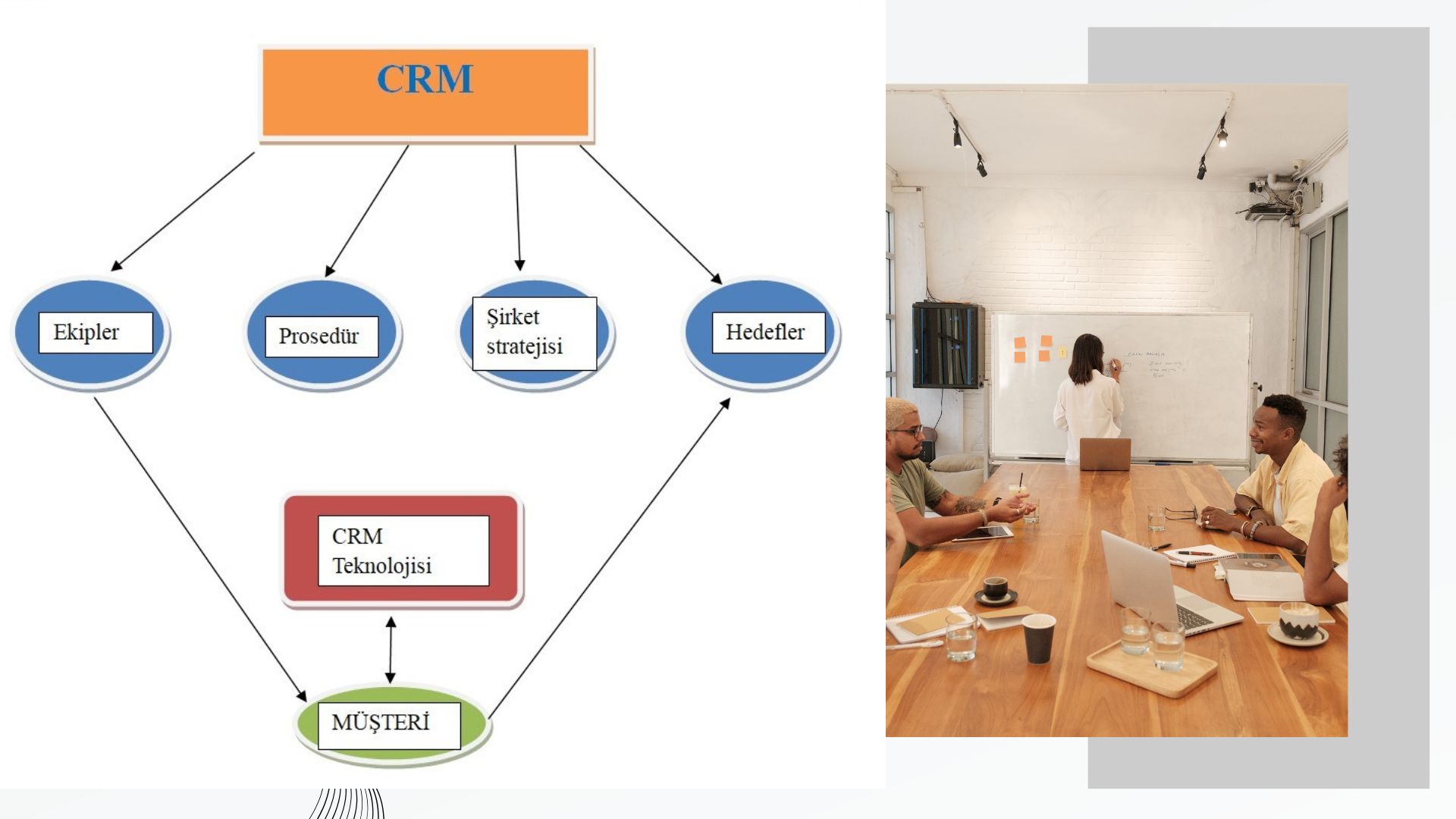
Companies maintain customer service teams to establish, continue, and develop relationships with customers. With the traditional method, transferring customers from one department to another and having to re-explain every issue at each touchpoint takes a long time and negatively affects the customer experience.
CRM focuses on better understanding customers and answering their questions. Call centers, contact centers, and similar units are established to answer customer questions faster.
CRM offers several capabilities and conveniences to customer service teams. The most important ones include:
Marketing teams contribute to sales processes by managing customer relationships and deliver products to the target audience more effectively. CRM enables the marketing team to use data correctly, manage campaigns effectively, and optimize strategies by continuously monitoring customer feedback.
Sales teams optimize sales processes by managing customer relationships and ensure the company reaches its sales targets. CRM increases the efficiency of sales teams by offering a customer-centric approach.
A company's expectations from a CRM system may differ from another company. Many factors affect companies' needs. However, a good CRM system should provide support for the following functions:
A CRM system connects and analyzes all collected customer data including contact information, interactions with company representatives, purchases, service requests, assets, and quotes. The system then allows users to access this data and understand what happened at each touchpoint. Through this understanding, a complete customer profile is developed and a solid customer relationship is built.
Marketing automation software helps automate various time-consuming marketing activities, creating more personalized experiences for customers in less time.
Audience segmentation is a way of dividing customers into different groups based on their characteristics. By segmenting the target audience, marketing campaigns can be better managed and campaigns targeted specifically to each group can be created.
With a CRM system, you can see what products customers buy, what they like and don't like about products, and what they're looking for in the future. Based on customer data, marketing campaigns can be personalized to better suit the target audience.
CRM makes it easy to organize customer information, better understanding their wants and needs, which helps build customer loyalty. Data can be organized with various CRM tools such as segments, tags, and groups.
Every business is different. Popup forms can be customized to work for the target audience, or personalized tags can be created for contacts.
Part of having good customer relationships is being able to communicate with them and being there when they need help. With a CRM system, chatbots and similar applications can be used so customers can easily reach customer service representatives.
It's also likely that you use other software to manage your company — whether it's e-commerce software or planning software. In either case, you may need to integrate third-party software into your CRM. With integrations, instead of going back and forth between different platforms to complete a task, all operations can be done from the same place.
Today, mobile phones are used very frequently. CRM software must absolutely be mobile-compatible.
In addition to organizing and tracking customer data, this data needs to be truly analyzed. CRM software should be able to perform many types of analysis.
There should be a database that allows entry, retrieval, and processing of different data types. CRM software should allow company employees to access data and enable different groups to access the same data.
Data should be regularly updatable and cleanable when needed.
CRM software should have security protocols that prevent customer data from being obtained by unauthorized persons.
The most important benefits that an effective CRM provides to companies include:
Customer service representatives with a well-managed database solve problems immediately, increasing overall satisfaction. This provides efficient and personalized assistance to customers.
The CRM system automatically stores customer data and provides customer representatives with information such as purchase history, preferences, and service history. This enables representatives to offer personalized service and recommendations, increasing customer satisfaction and loyalty.
Understanding customer behavior facilitates proactive engagement, addresses concerns promptly, and promotes loyalty through personalized incentives and services.
CRM uses technology that automates and increases the efficiency of business processes. It reduces the burden on employees to fulfill their tasks. CRM prevents unnecessary delays in executing marketing campaigns and other strategies.
Automated CRM tools provide access to a centralized knowledge database. This database is accessible by all members of the sales team or anyone in the company who needs it.
Data analysis and reporting is vital for companies trying to stay competitive, agile, and dynamic. Reporting and analytics enable more informed decision-making and strategic planning.
CRM provides companies with powerful analytics and reporting tools for data-driven decision making. Insights from the customer database form a foundation for strategic decision-making, product development, marketing strategies, and overall business planning.
Sales team automation makes selling more efficient, helping to sell faster.
CRM enables companies to examine past sales performance and identify key factors that benefit sales channels. Resources can be managed more effectively by anticipating future sales potential.
A dynamic market requires businesses to stay alert. The customer database provided by CRM offers real-time insights about market trends and customer preferences.
Analysis of past purchasing behaviors enables companies to identify cross-selling and upselling opportunities, thereby maximizing revenue from existing customers.
Using CRM systems, customers can be informed about new products, discounts, campaigns, and more.
Through feedback consisting of customer satisfactions or complaints, companies can determine new strategies.
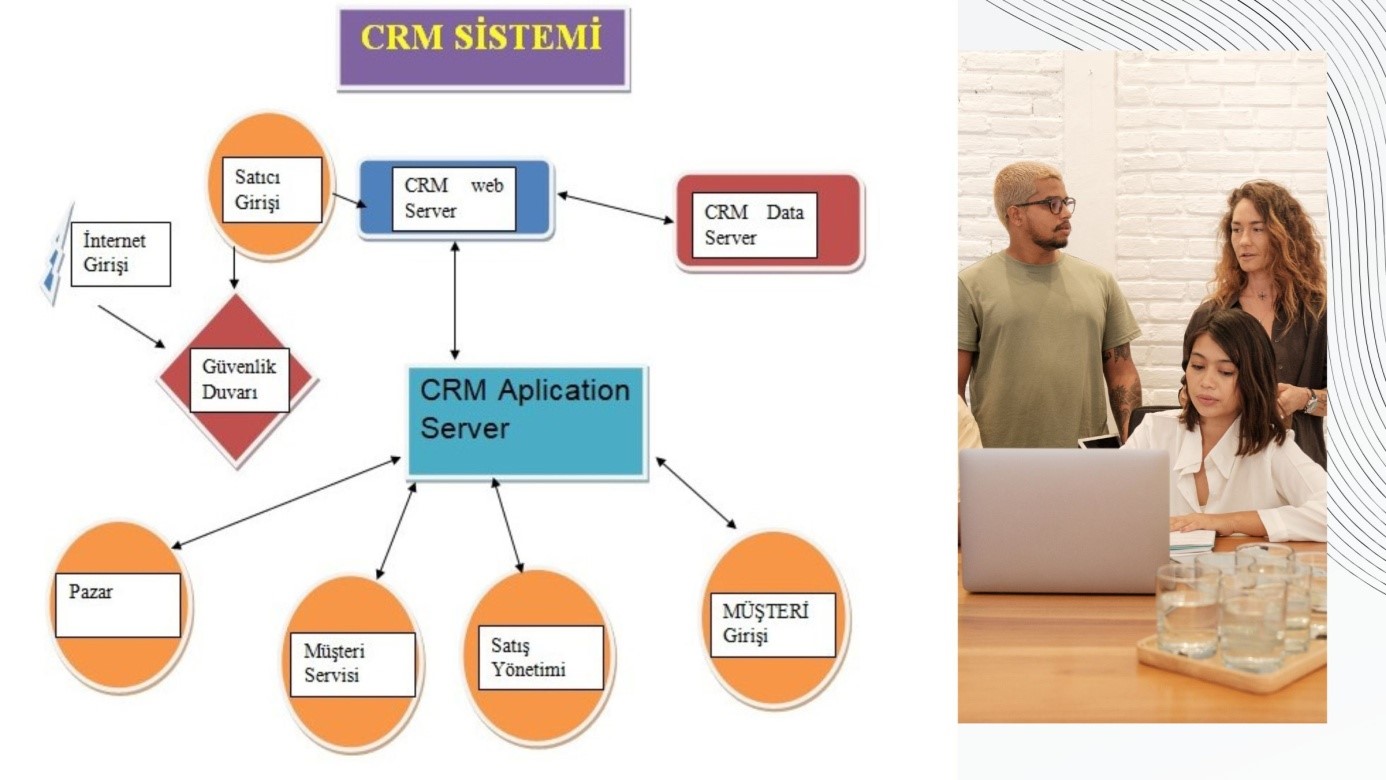
CRM software helps companies improve customer relationships by organizing and automating communications and activities across all customer-facing departments.
Planports CRM programs offer numerous advantages with packages tailored to your company's needs. You can choose from our CRM packages or develop custom modules and integrations.
Some of the countless advantages of Planports CRM programs include:
A CRM system can automate tasks such as sending follow-up emails, scheduling appointments, and generating reports.
Yes, many CRM systems can integrate and work together with other software such as sales automation, marketing automation tools, e-commerce platforms, and more.
Yes, there are different types of CRM systems such as sales force automation systems, marketing automation systems, and customer service systems.
Any company that interacts with customers and wants to improve customer experiences and sales processes can use a CRM system.
To choose the right CRM system, you need to identify your budget and business needs. Then examine the CRM systems on the market and select one that meets your needs. You can contact Planports and get support for any questions.
When you transition your company to CRM with Planports, managing these disadvantages and turning them into advantages is possible.
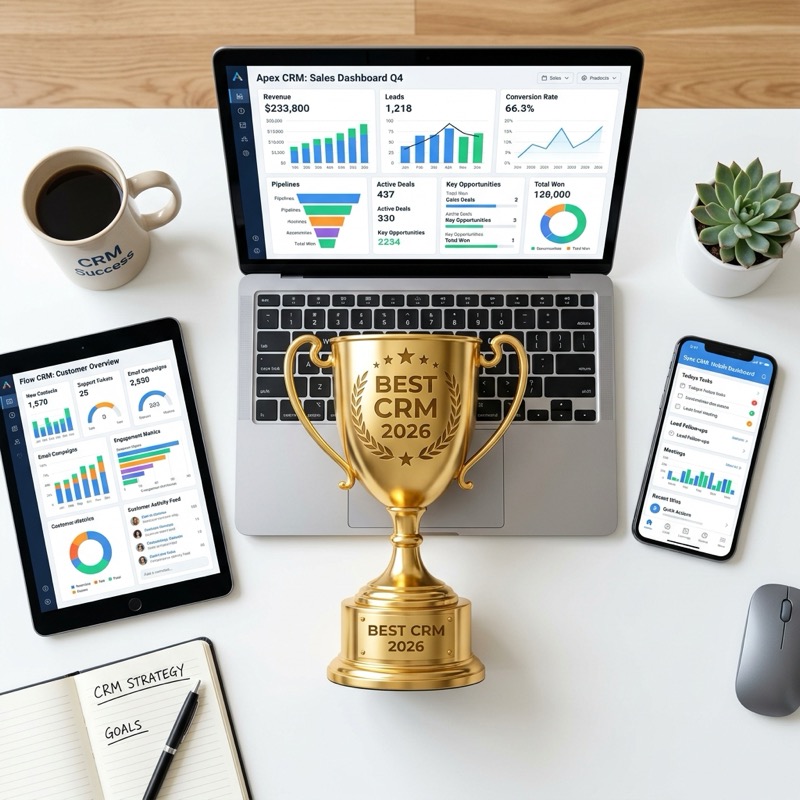
Today's best CRM software gathers customers from different channels on one platform with industry-specific customization.

Don't know what CRM stands for or why you need it? Don't worry — you're not alone.

CRM programs are among the most preferred tools for sales team management.